
TV-comparable measurement for premium transit networks.
Context
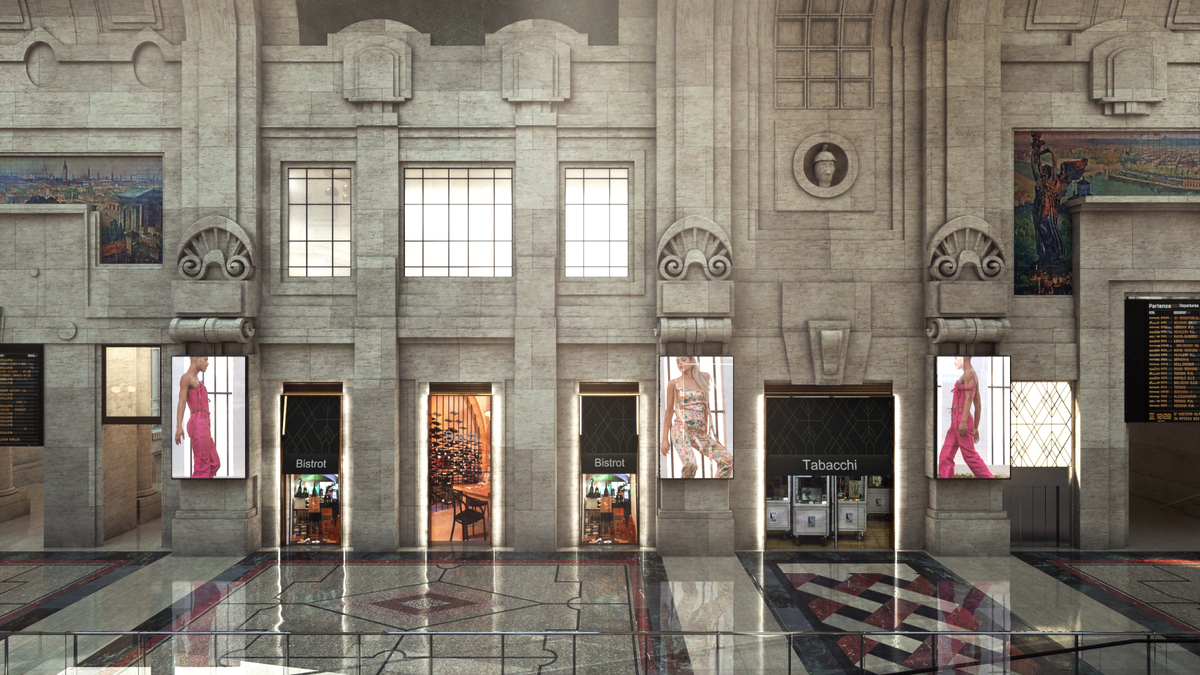
In Italy, Grandi Stazioni Retail operates one of the country's most complex and valuable environments: major railway stations serving hundreds of millions of travelers each year.
With its scale and dual retail-and-transit DNA, Grandi Stazioni Retail aimed to attract television budgets at a time when out-of-home advertising in Italy was under pressure. The obstacle was not reach, but language. Without reach and frequency expressed in familiar terms, planners had no reliable way to compare station media with broadcast channels.
Deployment
Beginning in 2013, Grandi Stazioni adopted a hybrid methodology that combined Quividi's audience data from digital screens with traveler studies and circulation modelling.
Developed alongside specialist partners, this approach produced net reach and frequency metrics aligned with GRP-based buying, making rail environments legible to TV buyers for the first time.
What changed
More than a technical achievement, this was a commercial repositioning: station-based media could now be evaluated, planned, and traded within the same frameworks as television, unlocking national budgets that had previously been out of reach.
As digital buying practices evolved, this alignment extended beyond broadcast. The same logic enabled Grandi Stazioni to integrate into digital and omnichannel planning environments, positioning physical rail media as part of a unified cross-channel marketplace.
Measurement had become a bridge between physical presence and digital planning.
Three stories that share DNA.
Bring us your network. We’ll show you the data.
Thirty minutes with a Quividi solutions architect, your fleet topology, a sandbox you can poke at.