
Converting opportunities to see into actual sales.
Context
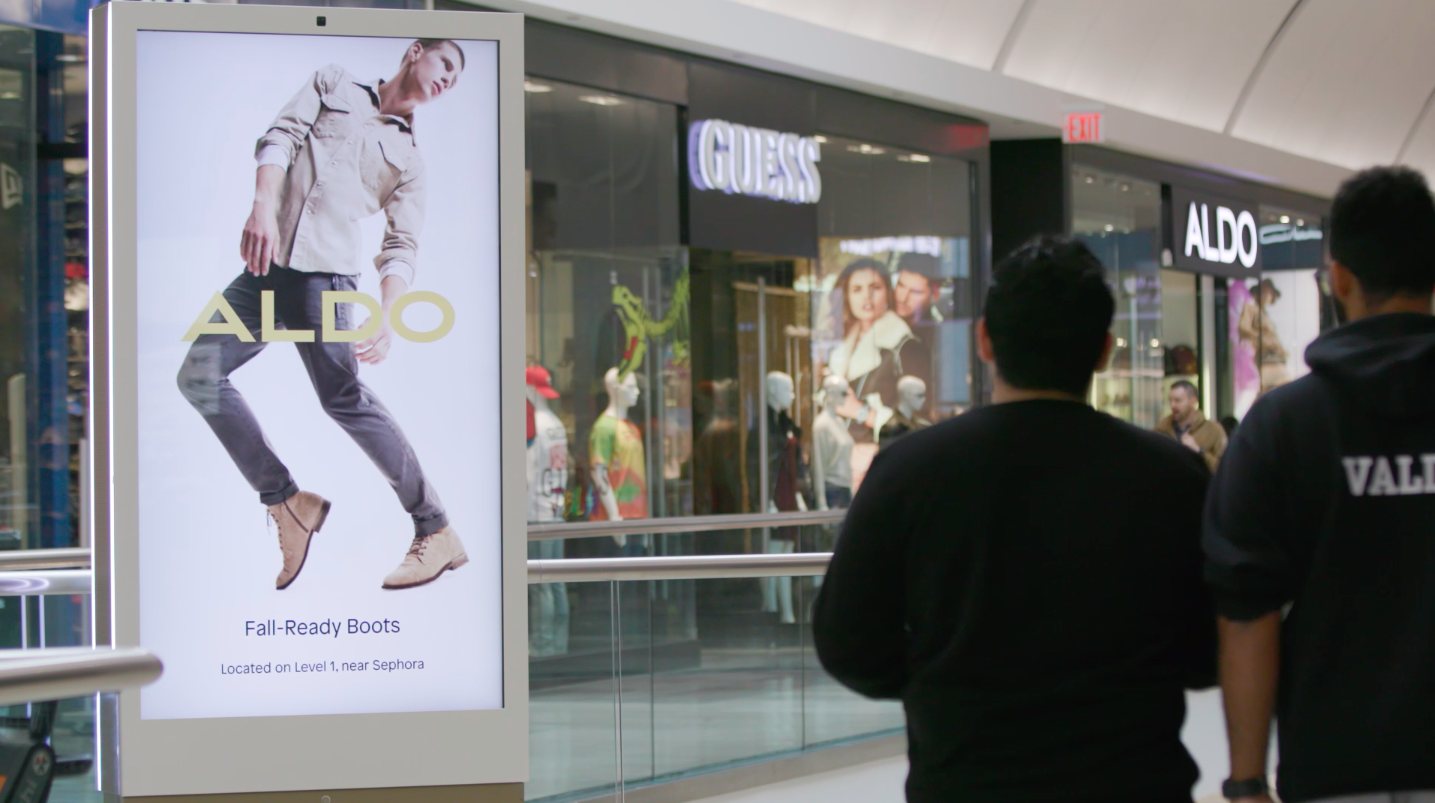
Unibail-Rodamco-Westfield (URW) operates flagship shopping destinations with over 1.2 billion annual visits worldwide. In the United States, its URW Network was the largest digital out-of-home network with screens equipped with Quividi.
In October 2018, URW and Quividi set out to prove a simple but demanding idea: if a mall screen shows the right creative to the right shoppers, will they pay more attention, and will that attention show up at the register?
Deployment
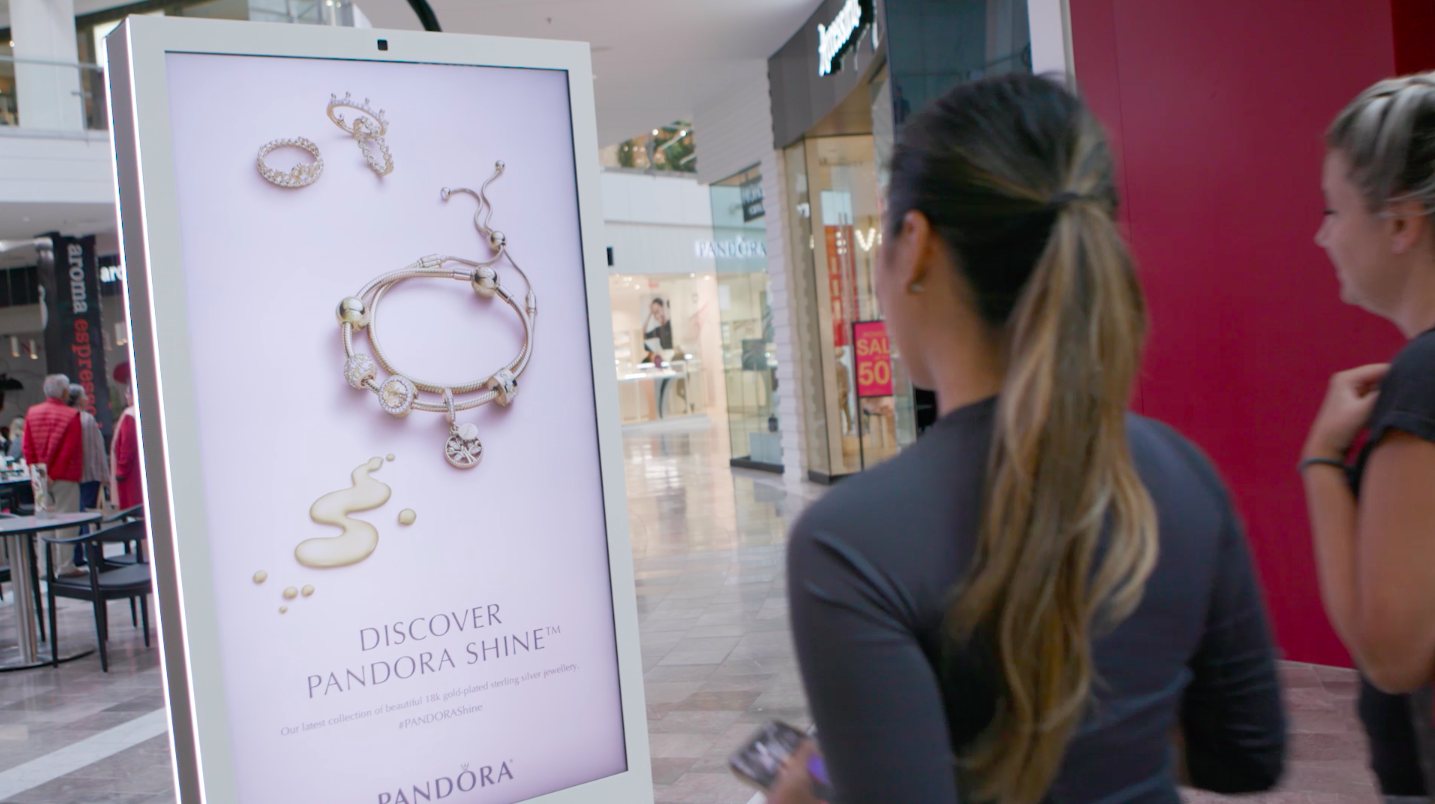
Two long-standing tenants took part: Aldo, the Canadian shoes and accessories retailer, and Pandora, the Danish jewellery brand. Each provided one generic brand creative and several targeted variants, each built for a specific shopper profile by gender and age group.
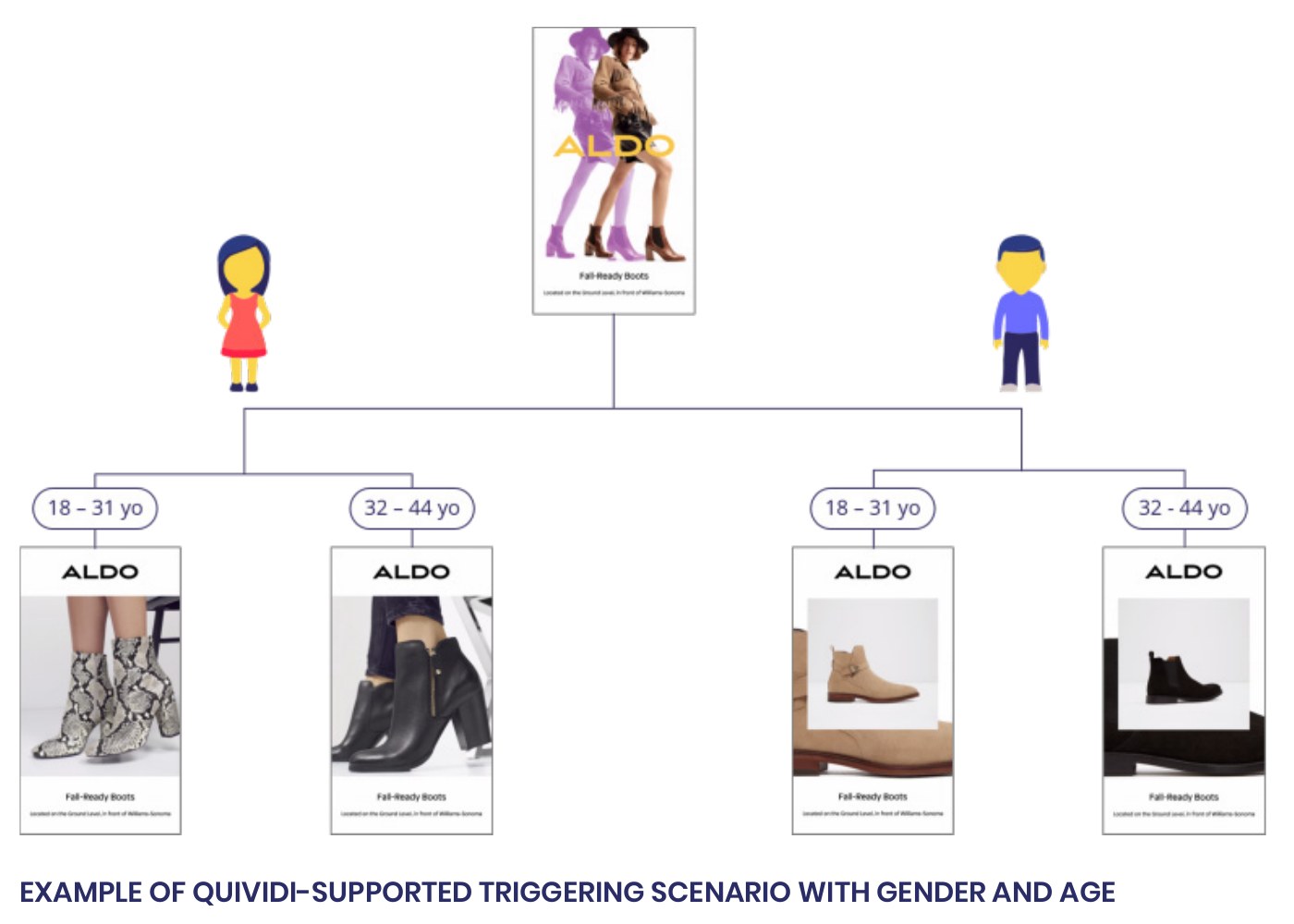
The pilot ran for two weeks across the URW Network. In week one, sales and traffic data were collected with no campaign running. In week two, the campaigns went live: Quividi triggered the targeted variants in real time whenever the matching audience was in front of the screen, and played the generic creative the rest of the time.
What changed
Aldo’s targeted creatives held attention 31% longer than the generic ad, and basket size in store rose by 11%. Pandora’s targeted creatives held attention 17% longer, and the number of transactions rose by 16%.
Because sales data from both retailers was compared week on week, the lift could be tied to the campaign rather than inferred from exposure alone.
“We were able to enhance the creative storytelling power of our advertising, garnering increased brand consideration, and transactions.” — Claudia DeVivo, Retail Marketing Manager, Pandora U.S.
Three stories that share DNA.
Bring us your network. We’ll show you the data.
Thirty minutes with a Quividi solutions architect, your fleet topology, a sandbox you can poke at.